AI Tools
The Ultimate Guide to AI Text-to-Speech: Essential 8 Tools


The Ultimate Guide to AI Text-to-Speech: 8 Game-Changing Tools That Will Transform Your Content in 2025
Imagine being able to turn any piece of writing into professional-quality audio within seconds. That’s exactly what modern AI text-to-speech technology offers today. We’ve moved far beyond the robotic, monotone voices that once made us cringe. These new AI-powered tools create speech so natural and human-like that listeners often can’t tell the difference between artificial and real voices.
The revolution in voice synthesis has opened doors for countless people and businesses. Content creators are producing audiobooks without hiring voice actors. Students with dyslexia can now listen to their textbooks instead of struggling through dense text. Marketing teams are creating multilingual advertisements without hiring international talent. Small business owners are adding professional voiceovers to their videos without breaking the bank. These tools have democratized high-quality voice content, making it accessible to anyone with a computer and an internet connection.
1. ElevenLabs: Free Text to Speech & AI Voice Generator
ElevenLabs offers an AI audio platform with emotionally aware text-to-speech, voice cloning, and dubbing capabilities in 32 languages, suitable for content creators, businesses, and developers.
The service provides both free and premium tiers, making it approachable for beginners while offering advanced features for professionals. New users receive monthly credits to test various voices and explore the platform’s capabilities. Content creators particularly value the extensive voice library, which covers everything from authoritative documentary narration to upbeat commercial presentations.
What distinguishes ElevenLabs is its sophisticated understanding of emotional context and natural speech patterns. The AI maintains consistent tone throughout lengthy audio projects, making it ideal for audiobook production and extended presentations. The platform also provides API access for developers wanting to integrate voice generation into custom applications.
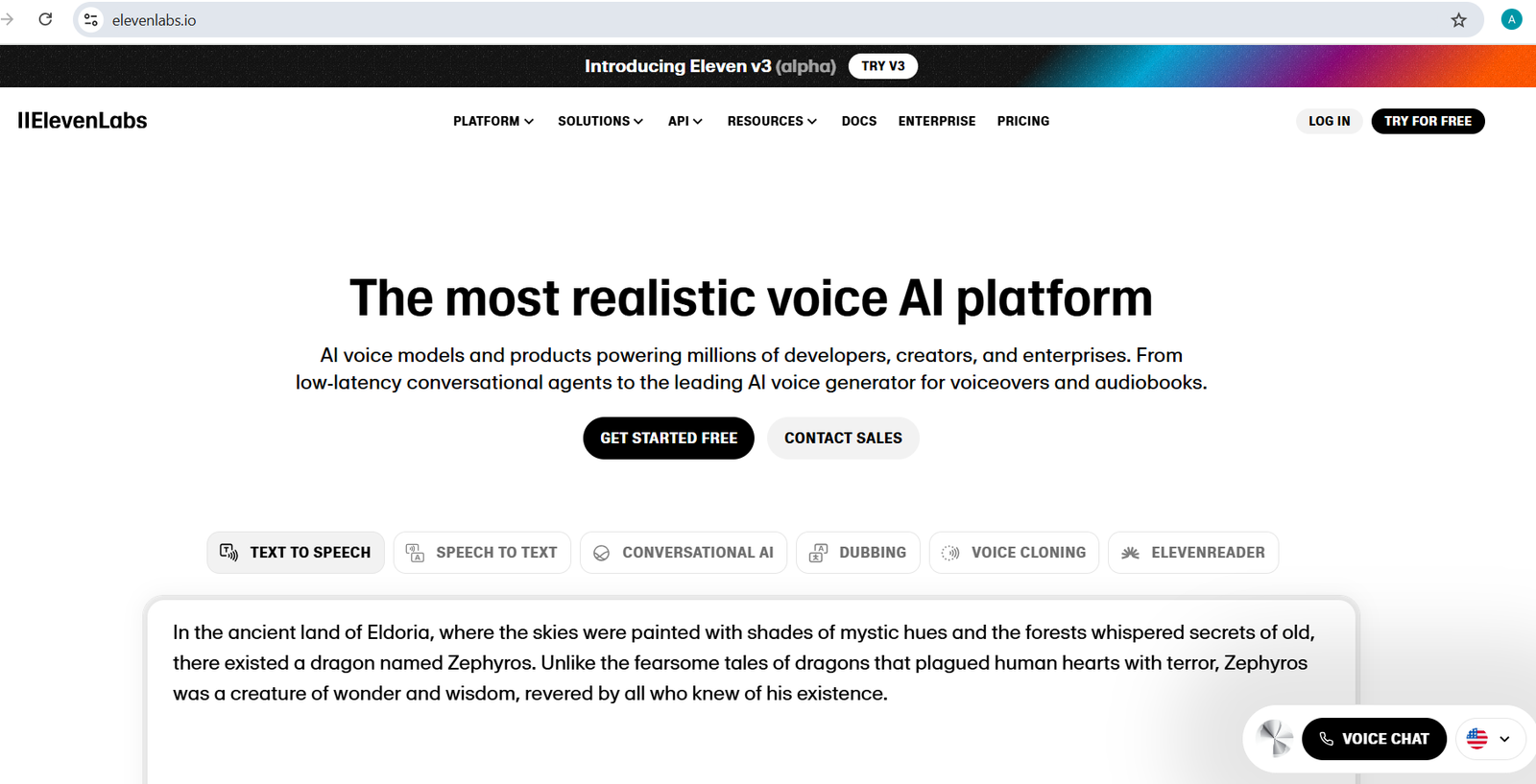
The Voice Design feature stands out as particularly innovative. Users can describe their ideal voice characteristics – such as “a warm, elderly gentleman with a slight Southern accent” – and the AI generates a matching voice profile. This creative approach to voice customization has made ElevenLabs popular among storytellers and content creators seeking unique vocal personalities.
2. Murf AI: The Content Creator’s Best Friend
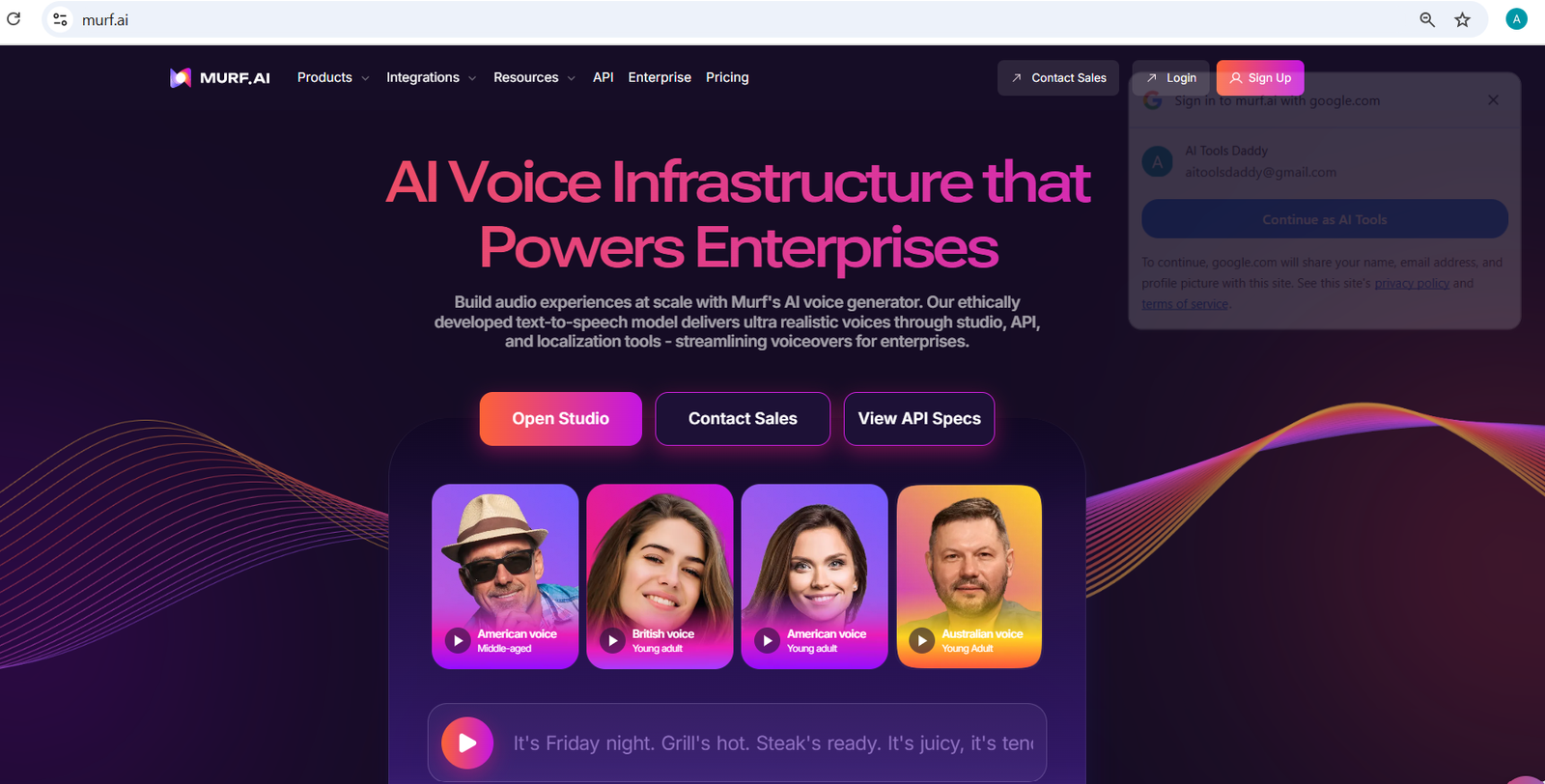
This Voice generator is for generating professional-quality audio. Use Murf’s lifelike AI voices for podcasts, videos, and all your professional presentations.
Murf AI has established itself as an exceptionally user-friendly platform that balances professional features with accessibility. This tool has become the preferred choice for YouTube creators, educators, and marketing professionals who need reliable, high-quality voice generation without a steep learning curve.
The platform offers an extensive library of AI voices spanning numerous languages and dialects. Users appreciate the granular control options, including adjustable speaking speed, pitch modification, and the ability to insert strategic pauses and emphasis. These features enable precise audio customization that matches specific project requirements.
Murf’s pricing structure appeals to regular users, with affordable monthly plans that provide substantial value. The integrated audio editing capabilities eliminate the need for separate software, allowing users to trim, merge, and refine their audio files within the same platform.
Voice cloning functionality is available, though it requires more source audio than some competitors. The platform integrates smoothly with popular design tools like Canva and presentation software, streamlining the workflow for marketing materials and educational content.
Commercial licensing comes standard with paid plans, ensuring users can confidently use generated audio for client projects, advertisements, and other business purposes without legal concerns.
3. Speechify: Your Personal Audio Assistant
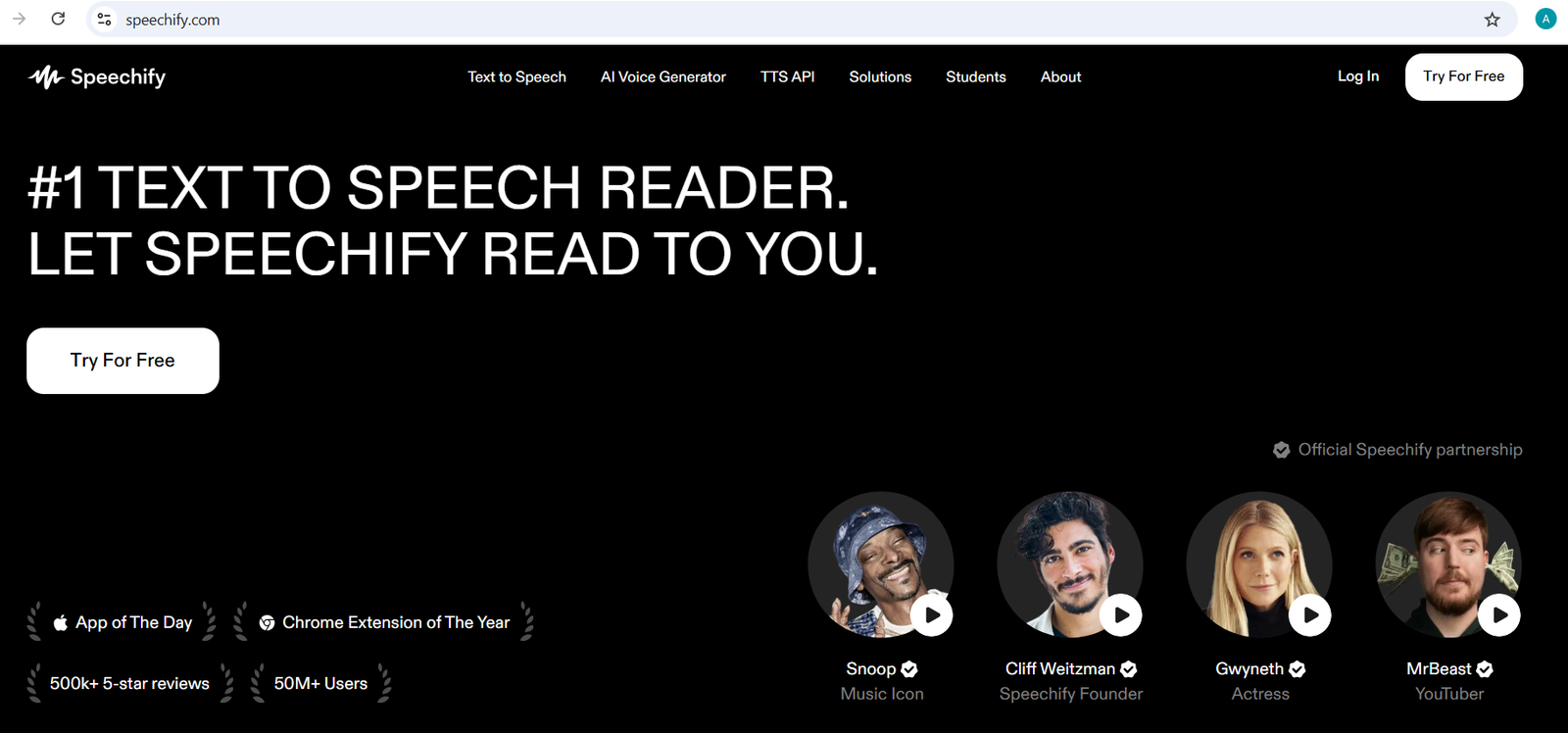
Speechify has really positioned itself in an area where they have tried to ensure that not only practical but also everyday text-to-speech technology is available for the service. It can both be a content digesting companion and a provider of those who would like excellent voiceovers, besides that Speechify has the following benefits to offer, it’s requirements that need to be satisfied..
The app can change almost any written content into spoken words that are clear and natural. No matter if it is web articles, PDF documents, emails, or even social media posts, they are all convertible to an audible form. This amazing functionality has been a hit not just with busy professionals but also with students and anyone who has a preference for listening when studying.
One of Speechify’s most talked about functions is its speed control. By adjusting the speed of playback to almost nine times the default speed, users can still hear everything as it is being made clear and readable. Students and researchers are the major beneficiaries of this feature, as they can cover their readings in a very short space of time..
Voice generation studio has many instruments for preparing first-class voiceovers. If users want to produce video narrations in their own voice, they can also make use of the voice cloning feature. Thus the user is going to have the same sounding voice across various video episodes or audiobook series. This concept has hit it off with video makers who have ongoing projects or who are launching new audiobook collections..
4. Descript: The All-in-One Content Creation Powerhouse
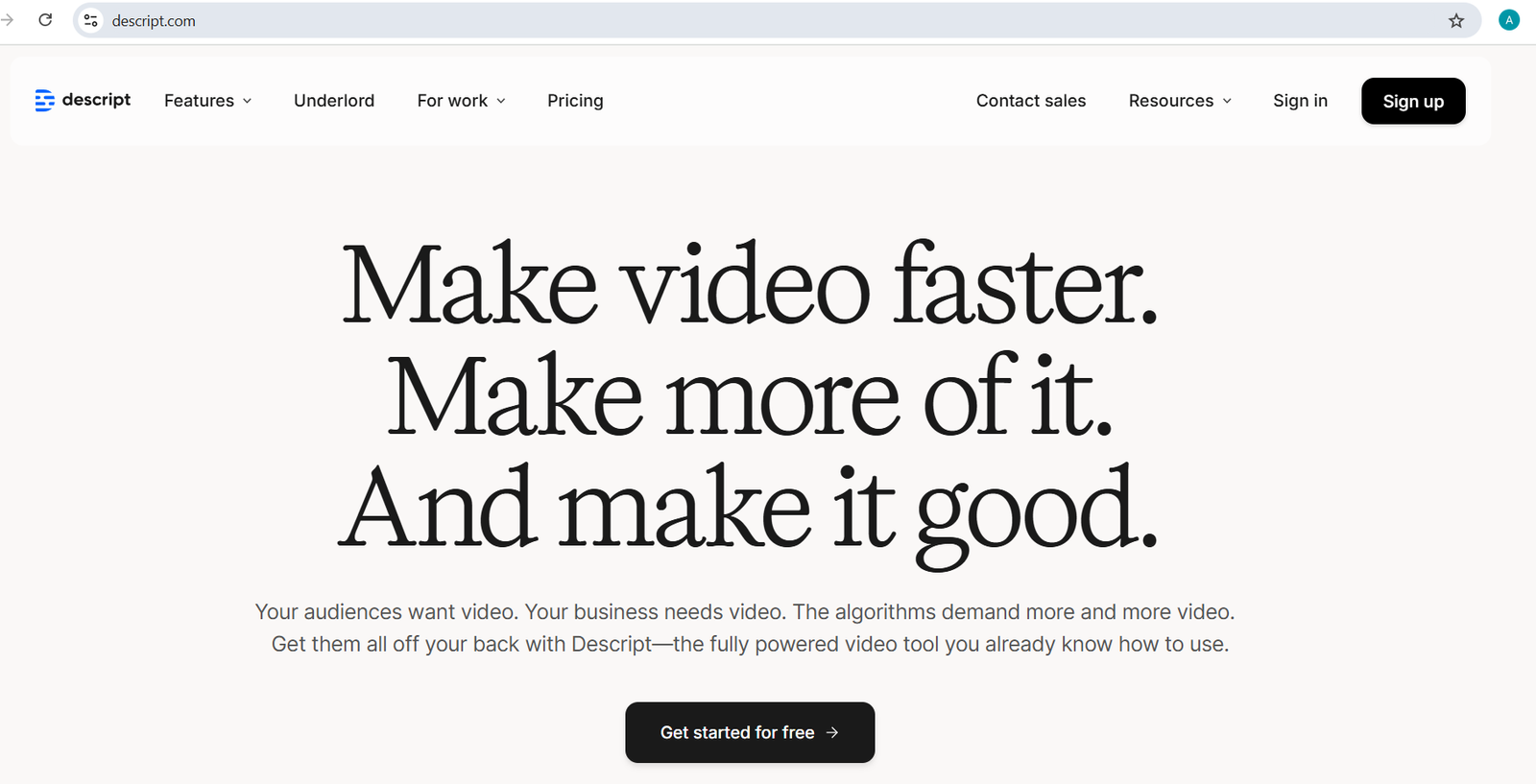
Descript is shaking up the content creation game by making audio and video editing as easy as editing a document. Instead of wrestling with complicated waveforms, users can simply tweak transcripts—this fresh approach has really changed the way creators tackle multimedia projects.
The Overdub feature is the star of the show, showcasing Descript’s impressive text-to-speech technology. With this tool, users can create new audio content in their own voice just by typing out text. This means content creators can easily fix mistakes, add new bits, or refresh outdated info without having to re-record entire sections.
Podcast creators and video producers are especially fond of Descript because it brings together a bunch of production tools in one handy platform. Features like automatic transcription, filler word removal, and voice generation all work together effortlessly. You can get rid of those common speech fillers like “um,” “uh,” and those awkward long pauses with just a click.
Descript
While the learning curve might be a bit steeper compared to simpler options, the extensive feature set makes it worth the investment for serious content creators. The monthly subscription gives you access to all the editing tools and voice generation features.
Advanced users really value the collaborative aspects, allowing teams to work on projects at the same time. With version control and commenting systems, managing complex projects with multiple contributors becomes a breeze.
5. Natural Reader: The Reliable Veteran
Natural Reader is a text-to-speech tool that’s been around for years and works reliably for both personal and business use. It offers good features at reasonable prices.
You can choose from many realistic-sounding voices in different languages. It works both online and offline – the offline option keeps your documents private and works without internet.
What makes Natural Reader special is that it can read almost any type of document: PDFs, Word files, websites, and even printed pages using camera scanning. This makes it useful for students, workers, and people who need accessibility help.
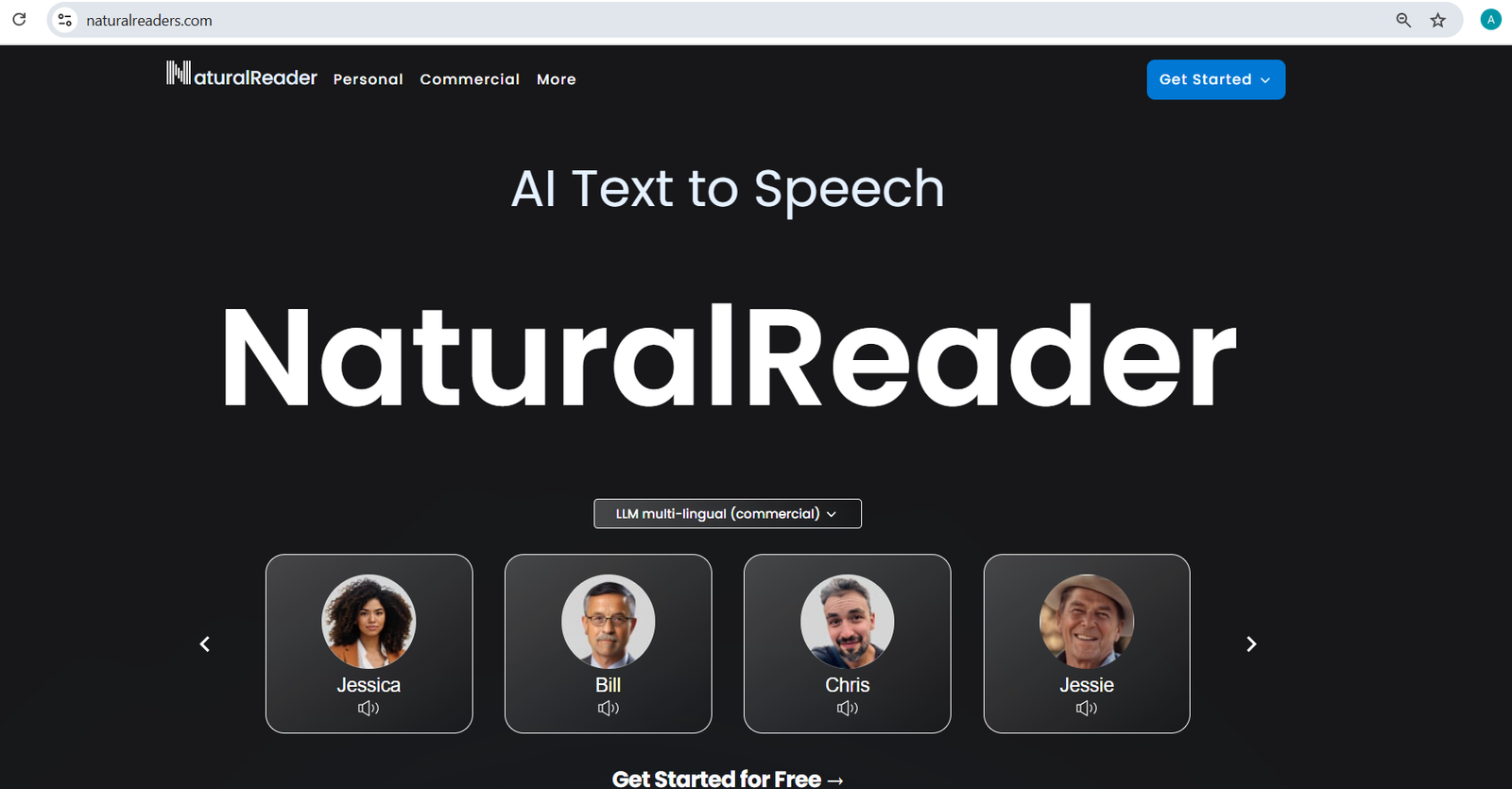
One of its best features lets you teach it how to say difficult words correctly. You can fix pronunciations of names, technical terms, or specialized vocabulary. This is really helpful for presentations or educational materials.
The pricing is clear and fair. You can pay monthly or buy it once. Businesses can get commercial licenses, and developers can connect it to their own apps. The straightforward pricing makes it easy to budget whether you’re buying for yourself or your company.
6. Microsoft Azure Speech Services: Enterprise-Grade Excellence
Azure Cognitive Services Speech represents Microsoft’s enterprise-focused approach to text-to-speech technology. While requiring more technical setup than consumer tools, it delivers unmatched scalability and customization for large-scale applications.
The platform provides an extensive voice library covering numerous languages and regional dialects. Neural TTS voices demonstrate exceptional quality, producing speech that rivals human narration in naturalness and clarity. The technology handles complex linguistic patterns and maintains consistent quality across different text types.
Scalability distinguishes Azure from consumer-focused alternatives. Organizations can process enormous volumes of audio without encountering rate limits or quality degradation. Real-time speech synthesis capabilities make it suitable for interactive applications like virtual assistants and customer service systems.
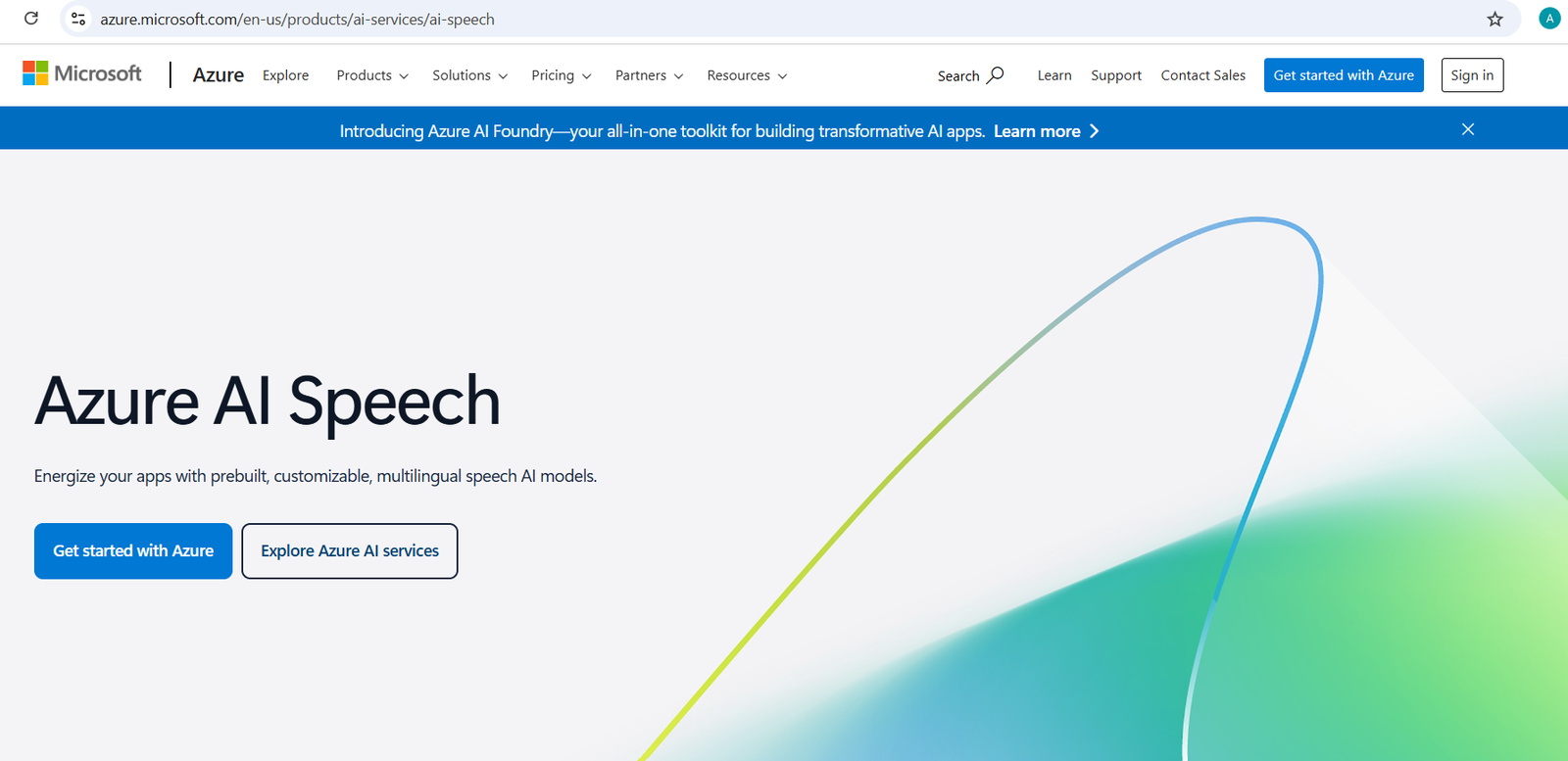
Custom Neural Voice functionality allows organizations to develop unique branded voices that maintain consistency across all audio content. This feature has proven valuable for companies producing audiobooks, training materials, and customer-facing applications.
Usage-based pricing can be highly cost-effective for high-volume applications. The service integrates seamlessly with other Microsoft products and provides comprehensive development tools for popular programming languages.
7. Amazon Polly: Cloud-Powered Voice Synthesis
Amazon Polly leverages AWS’s robust cloud infrastructure to deliver reliable, high-quality text-to-speech services. The platform has evolved significantly since its introduction, now offering some of the most natural-sounding AI voices available.
The service includes both standard and neural voice options, with neural voices utilizing advanced deep learning for superior speech quality. Support for Speech Synthesis Markup Language (SSML) provides detailed control over speech characteristics, including pronunciation, timing, and emphasis.
Real-time speech generation capabilities make Polly suitable for interactive applications. Chatbots, gaming applications, and virtual assistants can generate speech dynamically without pre-processing requirements. Multiple audio formats and quality levels accommodate different technical requirements.
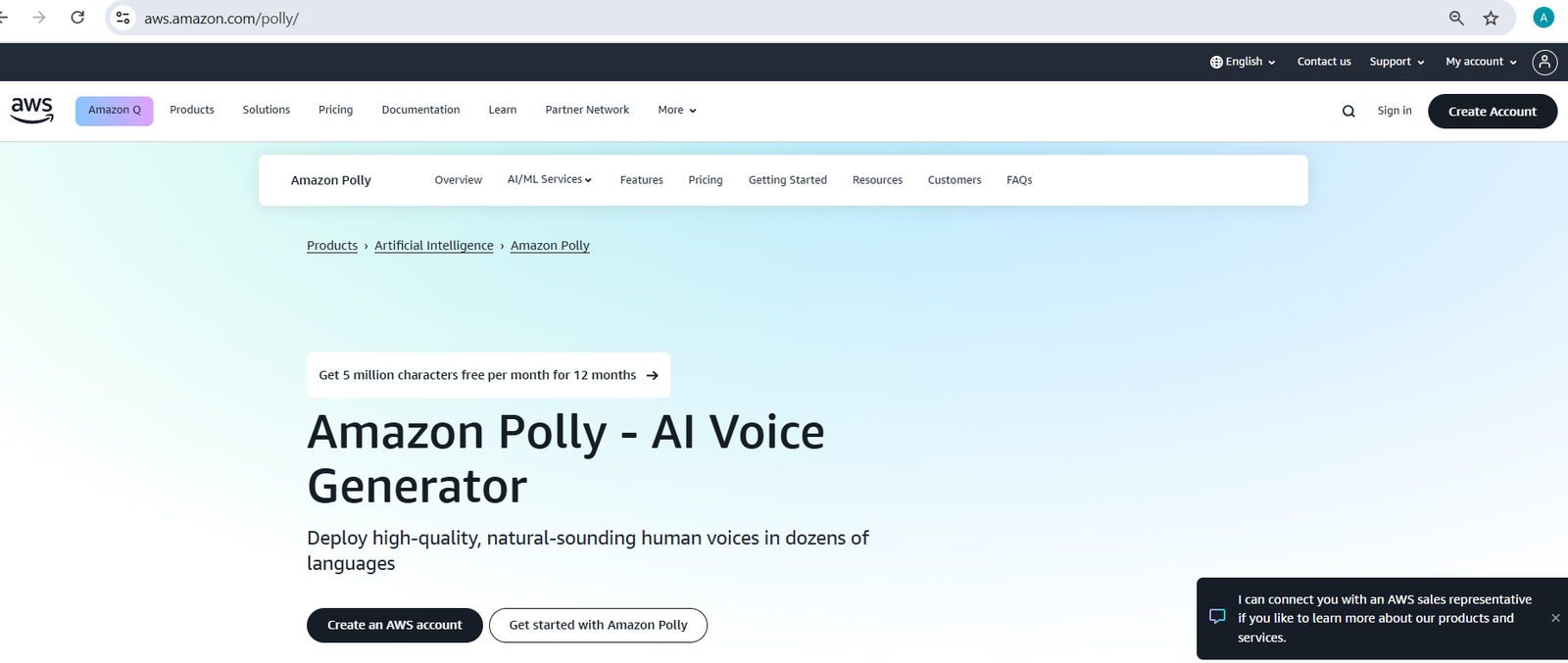
Pronunciation lexicons enable customization of specific word pronunciations, addressing brand names, technical terms, and foreign language insertions. Combined with adjustable speaking parameters, this customization makes Polly suitable for diverse professional applications.
Pay-per-use pricing offers flexibility for both occasional users and high-volume applications. Integration with other AWS services creates a comprehensive cloud-based solution for organizations already using Amazon’s ecosystem.
8. Google Cloud Text-to-Speech: AI-Powered Intelligence
Google’s Text-to-Speech service is based on the long-standing expertise of the company with the machine learning field and the skill of natural language processing. The technology offers the latest in voice synthesis, all running on Google’s stable cloud infrastructure.
With the help of WaveNet and various other advanced neural architectures, the voice generation receives the power to produce speech imbued with natural intonation and pronunciation. The service not only provides support for a great deal of language but also regional dialects, so it is possible to make a choice of the best fit for global applications guaranteeing a stable and uniform standard.
Google is strong in the processing of intelligent text and understanding context. The service is better equipped than many other alternatives to deal with complex sentences, proper nouns, and various document formats. SSML is a speech synthesis markup language that enables the precise control of the way to read the content.
AutoML Custom Voice empowers companies to create voice fonts with their own brand that can perfectly fit for their different missions. This feature is especially precious for companies that want to consistently use the same voice brand in various applications or international markets.
Choosing the Right Tool for Your Needs
Selecting the optimal text-to-speech solution depends on your specific requirements, budget, and technical expertise. Content creators might prioritize voice variety and emotional expression capabilities, while businesses often focus on scalability and integration options. Educational users frequently value document support and accessibility features.
Consider factors like voice quality, language support, pricing structure, and additional features when making your decision. Free trials and demo versions allow you to test different platforms before committing to paid subscriptions.
The technology continues advancing rapidly, with regular improvements in naturalness, emotional expression, and multilingual support. These developments promise even more sophisticated voice synthesis capabilities in the near future.
The Future of Voice Technology
The way we produce and listen to audio content has been completely transformed by AI text-to-speech technology. Anyone, regardless of financial means or level of technical proficiency, can now afford professional-quality voice synthesis. Many individuals and organizations have been able to improve their content and reach larger audiences thanks to this democratization.
These AI tools provide effective solutions whether you’re creating your first podcast, creating a mobile application, or just looking for better ways to consume written content. Without a doubt, the technology will keep developing, giving users everywhere access to even more realistic and adaptable voice synthesis capabilities.



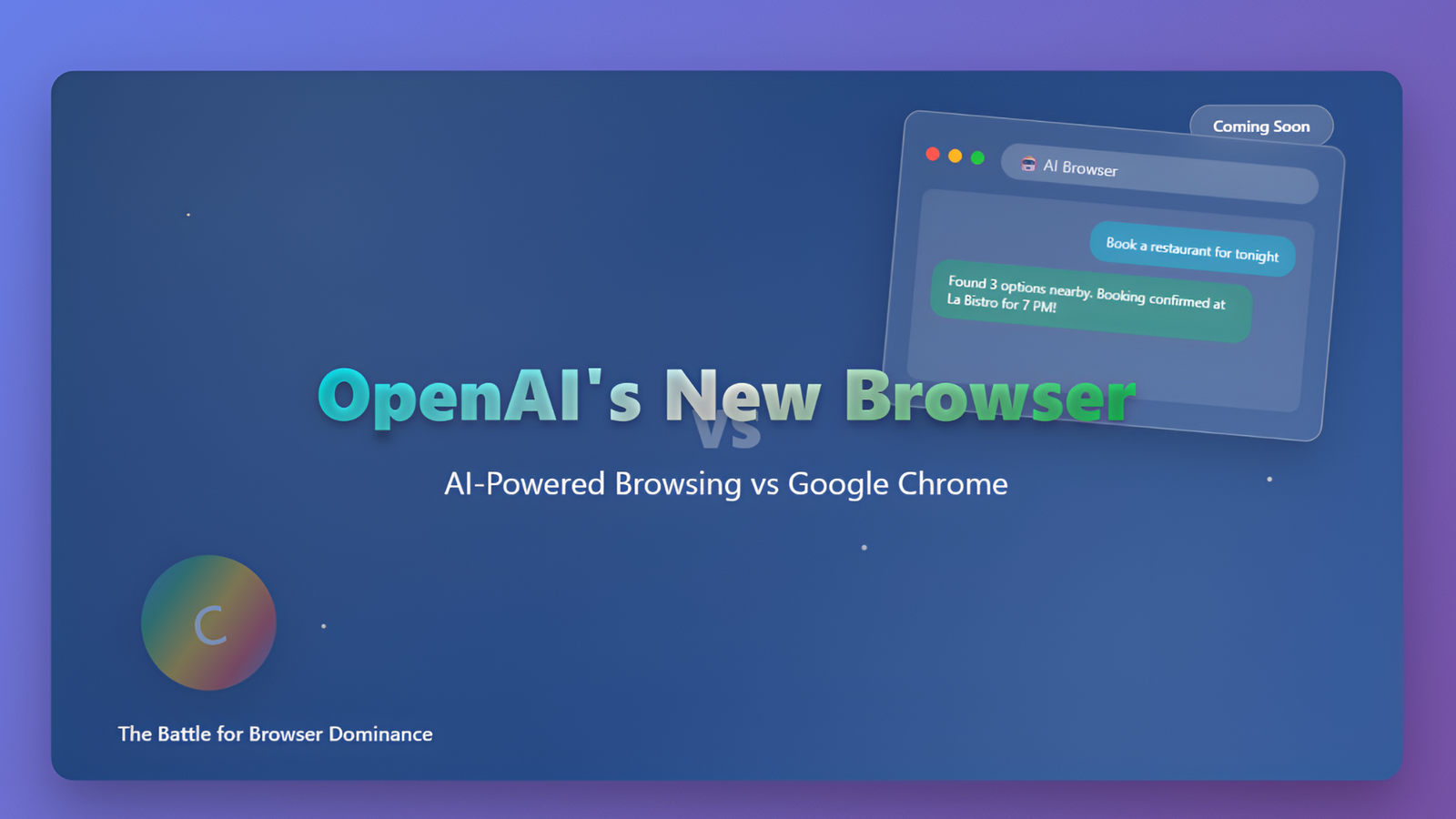
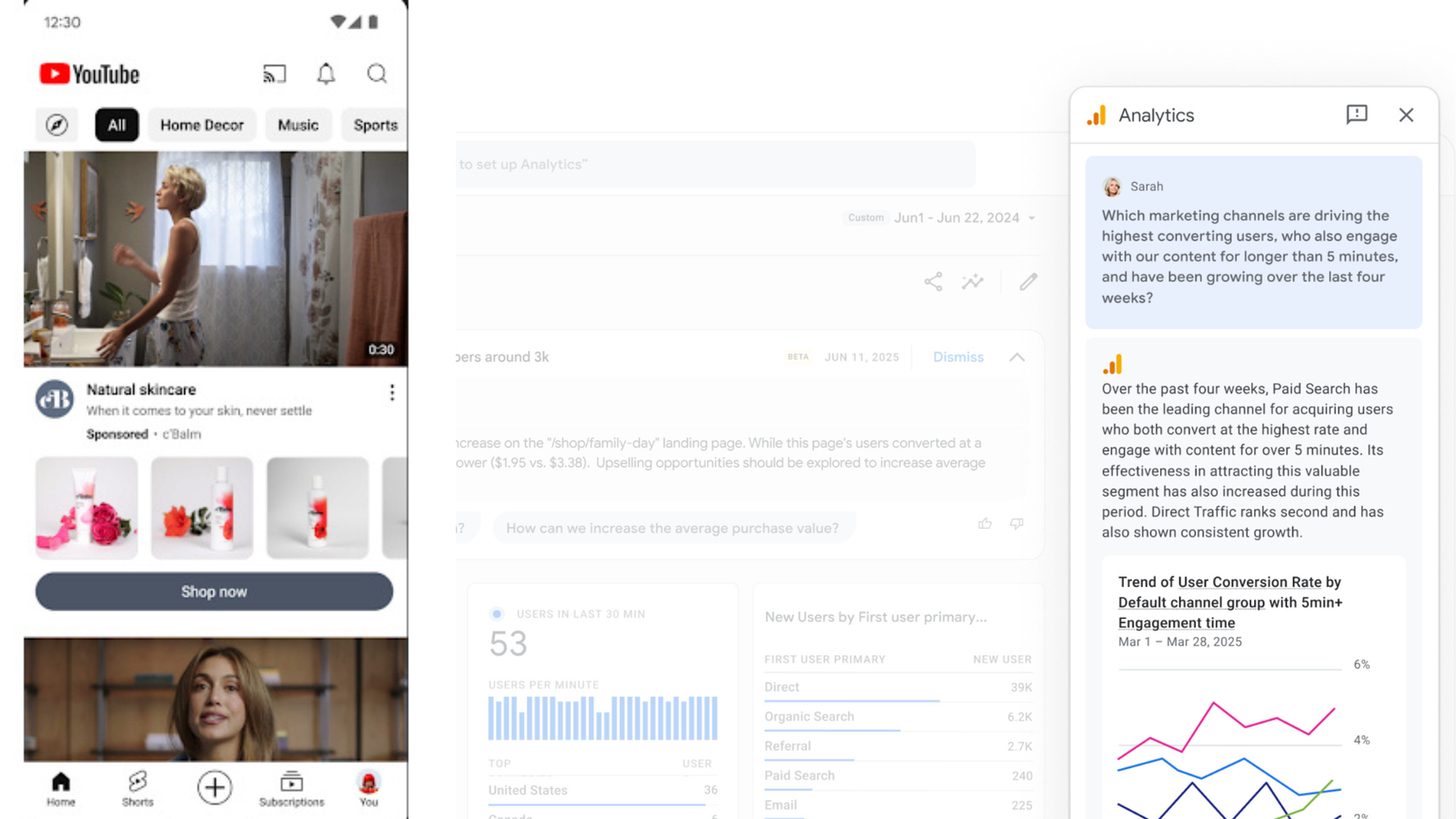


Artificial intelligence (AI) is now growing rapidly and started helping several business. In India, the firm increase home sales conversion rates by as much as 20 percent as developers lean into technology to streamline customer experiences, optimise pricing and speed up decision-making.
AI helps developers lift home sales
“From our conversations with sector experts, the most immediate impact of AI is visible in sales, marketing and pricing strategies,” said Shekhar Patel, president of the Confederation of Real Estate Developers’ Associations of India (CREDAI). “AI-powered chatbots, virtual site walkthroughs and predictive customer analytics are helping developers personalise offerings and improve conversion rates by up to 20 percent.”
Developers are using AI across the board—from customer-facing platforms to backend operations—to refine every aspect of the value chain.
Tata Realty and Infrastructure has implemented AI tools like Salesforce Marketing Cloud and Einstein AI to enhance homebuyer engagement and reduce friction across digital touchpoints. These tools have allowed the company to personalise interactions and optimise lead qualification in real time.
“Since implementing AI-led tools, we have achieved a 20 percent reduction in CPQL (cost per qualified lead), and booking conversions rate have grown by 10 percent year-on-year,” said Sanjay Dutt, MD and CEO of Tata Realty. “The improvements stem from sharper targeting, real-time campaign optimisation and improved homebuyer interactions.”

In 2025 there were several AI tools launched and most apps try to replace human tasks entirely. But Granola in this case performed the best option and took a different approach—and Silicon Valley noticed big time. This simple AI note-taking app has raised over $60 million in funding and caught the attention of major tech companies, proving that sometimes the best AI doesn’t replace humans but makes them better.
The Problem That Started It All
Anyone who’s ever sat through back-to-back meetings knows the struggle. You’re trying to pay attention, participate meaningfully, and capture important details all at once. Traditional note-taking apps make you choose between being present or being thorough. Voice recorders create hours of audio nobody wants to review. Meeting bots feel awkward and impersonal.
Granola saw this gap and decided to build “the only one putting the human first.” Instead of trying to replace human note-takers, they created an AI-powered notepad that works alongside your natural note-taking habits.
How Granola Actually Works
The concept is beautifully simple. Granola works by installing locally on your Mac and connecting to your calendar. It captures audio from popular meeting platforms like Zoom, Google Meet, and Microsoft Teams without requiring any meeting bots to join. You jot down the things that matter to you during the meeting, just like you would with a regular notepad.
The magic happens afterward. Granola uses AI to transcribe the entire meeting in the background, then combines your handwritten notes with the full transcript to create comprehensive, useful notes. No awkward meeting bots – just beautiful notes for you and your team, every single time.
Why Silicon Valley Went Crazy for It
The milestone showcased an incredible story. In October 2024, Granola raised a $20 million Series A funding round despite just 5,000 weekly users. That number has grown consistently by 10% each week since, reaching around 50,000 users by early 2025. Then in May 2025, AI-powered notetaking app Granola is raising $43 million in funding at a $250 million valuation.
But it’s not just about the money. Since launch, Granola has quickly gained traction among senior tech leaders at companies like Vercel, Ramp, and Roblox and top venture capital firms including Benchmark, Sequoia, Accel. These aren’t just any users—they’re the people who see hundreds of AI tools every week and choose what’s worth their time.
The Human-First Philosophy That Won
What makes Granola different isn’t just its technology—it’s its philosophy. They advocate a message that resonated across Silicon Valley: AI should support human thought, not replace it. In a world where AI companies rush to automate everything, Granola’s approach feels refreshingly human.
The app doesn’t try to think for you or make decisions about what’s important. Instead, it amplifies your own judgment and note-taking style. You decide what to write down in the moment, and AI fills in the gaps later. This approach respects both human intelligence and the irreplaceable value of being present in conversations.
AI Tools
Granola’s success represents something bigger than just good note-taking software. It shows that the most successful AI tools might not be the ones that replace human tasks entirely, but the ones that make human capabilities stronger. We worry a lot about AI replacing humans, sometimes AI tools can just make better humans.
The app also proves that simple concepts, executed well, can beat complex solutions. While other companies built elaborate AI meeting assistants with dozens of features, Granola focused on doing one thing exceptionally well—making meeting notes better without changing how people naturally work.
As remote work continues and meetings multiply, tools like Granola become more essential. The company’s rapid growth and high-profile funding rounds suggest that Silicon Valley believes AI-assisted note-taking is just the beginning of a larger trend toward human-AI collaboration.
For professionals drowning in meetings, Granola offers hope that AI can actually make work more human, not less. By handling the tedious parts of note-taking while preserving the human elements of attention and judgment, it might just represent the future of how we’ll work alongside artificial intelligence.
The lesson for other AI companies is clear: sometimes the best way to grab Silicon Valley’s attention isn’t to replace what humans do, but to make them better at it.

Bilibili has reportedly introduced an ambitious video podcast strategy with AI tool “Codename H” and creator support policies. Discover how this shift could reshape digital content creation.
Ever wondered why your favorite YouTubers are suddenly talking into cameras instead of just microphones? The answer lies in the explosive growth of video podcasts – and Bilibili is betting big on this trend with a comprehensive strategy that could change everything for content creators.
The Video Podcast Revolution Taking Over Bilibili
Video podcasts aren’t just audio content with a camera rolling anymore. It become the bridge between traditional podcasting and modern video consumption, offering creators unprecedented opportunities to connect with audiences. Bilibili recognizes this shift and is doubling down with an aggressive expansion strategy.
This milestone can define everything. In Q1 2025 alone, Bilibili users consumed a staggering 25.9 billion minutes of video podcast content – that’s a mind-blowing 270% increase from the previous year. With over 40 million users now engaging with this format, it’s clear that video podcasts have moved from niche experiment to mainstream phenomenon.
While the global Chinese podcast audience sits at around 150 million users, Bilibili has already captured more than a quarter of that market with their video-first approach.
Inside Bilibili’s Three-Pronged Support Strategy
Traffic Amplification for New Creators
Getting noticed on any platform is tough, but Bilibili’s cold start support program specifically targets the biggest hurdle new podcast creators face: visibility. Instead of leaving creators to fight for organic reach, the platform actively promotes fresh video podcast content to relevant audiences.
Think of it as having a personal marketing team working behind the scenes. New creators won’t have to spend months building an audience from scratch – they’ll get that crucial initial boost that can make or break a content creator’s journey.
Physical Recording Spaces in Major Cities
Here’s where Bilibili gets creative with their support. Free recording venues in first-tier cities solve a practical problem many creators struggle with: finding professional-quality spaces without breaking the bank.
Picture this scenario: You’re a podcast creator in Shanghai with great ideas but recording from your cramped apartment. Bilibili’s offering changes everything – suddenly you have access to professional lighting, acoustic treatment, and equipment that would cost thousands to set up independently.
The Game-Changing AI Creation Tool
But the real star of Bilibili’s strategy is their upcoming AI creation tool, internally dubbed “Codename H.” This isn’t just another AI assistant – it’s specifically designed to tackle the most time-consuming aspect of video podcast production: finding and editing visual content.
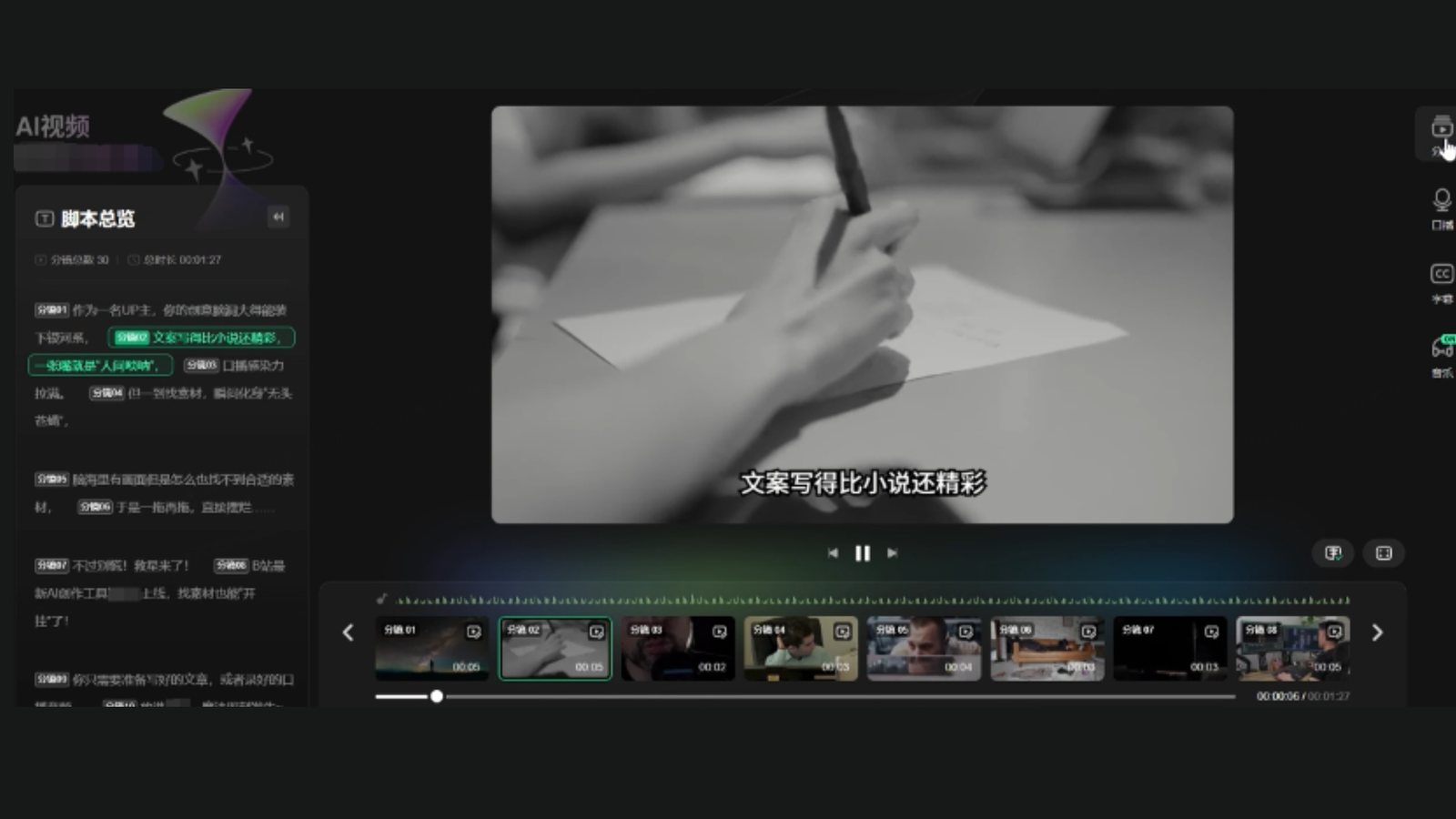
Bilibili Codename H
How “Codename H” Works Its Magic
The AI tool accepts two input formats: written scripts and audio recordings. Creators simply upload their content, and the system automatically generates relevant visuals, graphics, and supporting materials. Currently, it can process 1,000 words of content in just six minutes, with plans to reduce that to three minutes.
Imagine spending hours searching for the perfect image to illustrate your point about market trends, only to have AI deliver exactly what you need in seconds. That’s the promise of Codename H.
The tool supports two main templates:
- Podcast format: Optimized for conversational content with dynamic visual elements
- Knowledge-sharing format: Designed for educational content with informative graphics and charts
Early feedback from beta testers has reportedly exceeded expectations, suggesting the tool genuinely solves real creator pain points rather than just adding unnecessary complexity.
Why This Matters for Content Creators
The Productivity Revolution
Video podcast creation typically involves multiple steps: recording, editing, visual research, graphic design, and post-production. Codename H collapses several of these steps into an automated process, potentially reducing production time by 60-70%.
For creators juggling multiple projects or those just starting out, this efficiency gain could be the difference between sustainable content creation and burnout.
Lowering the Technical Barrier
Not everyone’s a video editing expert, and that’s okay. Bilibili’s approach recognizes that great content creators shouldn’t need to become technical wizards to succeed. By handling the visual heavy lifting, creators can focus on what they do best: creating compelling, valuable content.
The Bigger Picture: Bilibili’s 2025 Vision
This video podcast push fits into Bilibili’s broader 2025 strategy, which includes strengthening AIGC capabilities, improving conversion rates, and expanding advertising automation. The company is also testing “B Mini Programs” in gaming, with plans to expand into short dramas and novels.
What’s particularly smart about this approach? Instead of competing directly with established platforms on their strengths, Bilibili is creating new categories where they can lead from the front.
The integration of AI tools with creator support services suggests a platform that understands modern content creation challenges. Rather than just providing hosting, Bilibili is building an ecosystem that nurtures creator success.
What This Means for the Future
The success of Bilibili’s video podcast strategy could influence how other platforms approach creator support. We might see more platforms offering integrated AI tools, physical resources, and targeted growth support rather than just hosting services.
For creators, this represents a shift toward platforms that actively invest in their success rather than leaving them to figure everything out independently. The combination of AI assistance, physical resources, and traffic support creates a compelling value proposition that could attract creators from competing platforms.
Key Point
Bilibili’s comprehensive video podcast strategy, anchored by the innovative Codename H AI tool, represents more than just another platform update. It’s a fundamental reimagining of how platforms can support creator success through integrated technology, resources, and growth strategies.
Ready to explore how AI-powered content creation could transform your own projects? The video podcast revolution is just beginning, and platforms like Bilibili are showing us what’s possible when technology truly serves creativity.




 AI News8 months ago
Google Expands Firebase Studio with AI Tools for Popular Frameworks

 AI News9 months ago
Turn Photos into Videos Using Google Gemini AI
- AI News9 months ago
Apple New AI Model Can Detect Pregnancy With 92 percent

 AI Tutorial9 months ago
How to Turn Off Microsoft AI Features
- AI News8 months ago
YouTube rolls out new AI-powered tools for Shorts creators
- AI News8 months ago
OpenAI has now restored the services after outage
- AI News9 months ago
Google hires Windsurf execs in $2.4 billion deal
- AI Tools9 months ago
Is This Simple Note-Taking App the Future of AI?